|
Author's Note
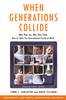
When Generations Collide
Who They Are. Why They Clash. How to Solve the Generational Puzzle at Work.
by Lynne C. Lancaster and David Stillman
The Workplace Players Defined
Traditionalists: Born between 1900 and 1945, and about 75 million strong, they were defined by such events as World War I, the Roaring Twenties, the Great Depression, the New Deal, World War II, the Korean War and the G.I. Bill. God-fearing, hard-working, and patriotic, they could best be described by a single word: loyalty. This is a generation that learned at an early age that by putting aside the needs and wants of the individual and working together toward common goals, they could accomplish amazing things.
Their respect for authority and their experiences in the military (over 50% of Traditionalist men are veterans) taught them that a top-down approach was the most efficient style for getting things done. Today, the management style of many traditionalists is still modeled on a military chain of command. But by the early 1960s, things started to change as the Baby Boomers began busting down corporate America's front doors.
Baby Boomers: Born between 1946 and 1964, the 80 million Baby Boomers changed every market they entered, from the supermarket to the job market to the stock market. The single most important arrival during the childhood of the Boomers was television. Suddenly the generation gap widened as an entire generation of Boomers could relate to a whole set of television reference points that were unknown to Traditionalists. Deeply divisive issues like the war in Vietnam, Watergate, protest and human rights movements, the OPEC oil embargo, stagflation and recession permanently changed the Boomers.
If the key word for Traditionalists is loyalty, the key word for Boomers is optimism. They were raised to believe that anything was possible, and that they could change the world for the better. At the same time, Boomers are also marked by intense competitiveness. You can't be born and raised with eighty million peers competing with you for everything from a place on the football team to a place in the college of your choice to a placement with your dream company and not be competitive. Boomers have again and again been labeled the "Me Generation," at least in part because they have been so identified by their accomplishments at work.
Generation Xers: Born between 1965 and 1980, the 46 million Gen Xers grew up seeing every major American institution called into question. Understandably, their defining trait is skepticism. From the presidency to the military to organized religion to corporate America, you name the institution and Xers can name the crime. Combine that with a U.S. divorce rate that tripled during the birth years of Generation X and you have a generation that distrusts the permanence of institutional and personal relationships.
While Boomers' childhoods were revolutionized by the invention of a single medium, the television, Xers don't have enough fingers and toes to number the media that have sprung up during their lifetime. Cable TV, digital TV, satellite TV, VCRs, video games, fax machines, microwaves, pagers, cell phones, handheld computers, and the most life-changing item of all, the personal computer.
Generation Xers are an extremely resourceful and independent generation who count on their peers and themselves to get things done and don't hold out too many false hopes that any person or institution is going to swoop down and save them from reality. While it's great to be a self-starter, throw skeptical, independent Xers into the mix with the loyal Traditionalists and the optimistic Boomers and . . . KABOOM!
Millennials: Born between 1981 and 1999, the 76 million Millennials came of age during an era when technology moved ever closer to the people. In fact, it moved right into their pockets. This is a generation that has had access to cell phones, personal pagers, and computers since they were in diapers. Through the Internet, they have visited virtually every corner of the globe and have been able to choose between shopping at the local mall or the virtual mall.
Because of the optimistic, idealistic parenting style of their Boomer parents, Millennials feel empowered to take positive action when things go wrong. They also seem to have absorbed some of the wisdom of each generation that has gone before. It's as if the Traditionalists have given the Millennials a dose of traditional loyalty, Boomers have given them the desire and skills to be optimistic about their ability to make things happen, and Xers have given them just enough skepticism to be cautious. As a result, the Millennials have combined these traits into their own unique identity as realistic problem solvers.
Millennials' defining traits also include an appreciation of diversity in all its forms -- after all, they've been exposed to many different kinds of people through travel, day care, technology, and the media. Combine their confident, pragmatic nature with a workplace that hasn't yet made way for them, and you're going to have a combustible atmosphere that could blow at any time.
More information and prices from:
Amazon.com - US dollars
Amazon.co.uk - British pounds
Amazon.de - euros
|