Knowledge Management
"The knowledge economy stands on three pillars. The first:
Knowledge has become what we buy, sell, and do. It is the most important factor of production.
The second pillar is a mate, a corollary to the first: Knowledge assets - that is, intellectual
capital - have become more important to companies than physical or financial assets. The third
pillar is this: To prosper in this new economy and exploit these newly vital assets, we need
new vocabularies, new management techniques, new technologies, and new strategies. On these
three pillars rest all the new economy's laws and its profits." [Stewart, T.A. (2001) The
Wealth of Knowledge: Intellectual Capital and the Twenty-first Century Organization,
Doubleday].
Todd R. Groff (2003) defines knowledge management as 'the tools, techniques, and strategies
to retain, analyse, organize, improve, and share business expertise.' Groff points out that
businesses have traditionally aimed to be successful through the management of finite resources. Now
they can use their infinite resources - the knowledge their people possess. Moreover, he
considers, 'Unlike most assets, knowledge is not depleted when it is shared. In fact,sharing
knowledge almost invariably results in increased knowledge for both parties.'
Storey and Quintas(2001) state that knowledge management has become one of the most significant developments in management
and organization theory in recent years. It seems to give fresh insights into the theory of the firm
and it is also the subject of claims about a completely new kind of economy - the 'knowledge economy.'
Knowledge is scarcely as novel a concept as many protagonists of knowledge management claim, but it
has only become a management topic relatively recently. Moreover, a large number of organizations are
attempting knowledge management projects - not always successfully.
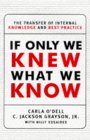
What Knowledge Management is not (If Only We Knew What We Know : The Transfer of Internal
Knowledge and Best Practice by Carla S. O'Dell, Nilly Essaides, 1998):
* 'Knowledge Management (KM) is not a new religion or spiritual calling.
* 'It is not an attempt to rally disgruntled employees around an appealing physical concept.
* 'It is not an existential search for the truth. (Actually, it's about the entirely worldly task of making money.)
* 'It is not a science or a discipline - yet.
* 'It is not the latest management fad.'
O'Dell and Essaides (1998) argue that knowledge management is not a fad because:
- The power of learning will never be obsolete.
- Some people may treat knowledge management as a religion but real knowledge management is practical
rather than theoretical and should have bottom-line results.
- Technology is not relied upon to make processes efficient, instead, technology is used to
facilitate the sharing of knowledge in people's heads.
- It is consistent with modern team-and process-based approaches to management.
We will see later that there are criticisms of the way that information technology has come
to dominate conferences and publications on knowledge management and, in doing so, often lost
the point. In fact, if you think that buying (or rather, being sold) a software package
to collect information is 'knowledge management' you are probably wasting your money. Knowledge is
more than technology.